


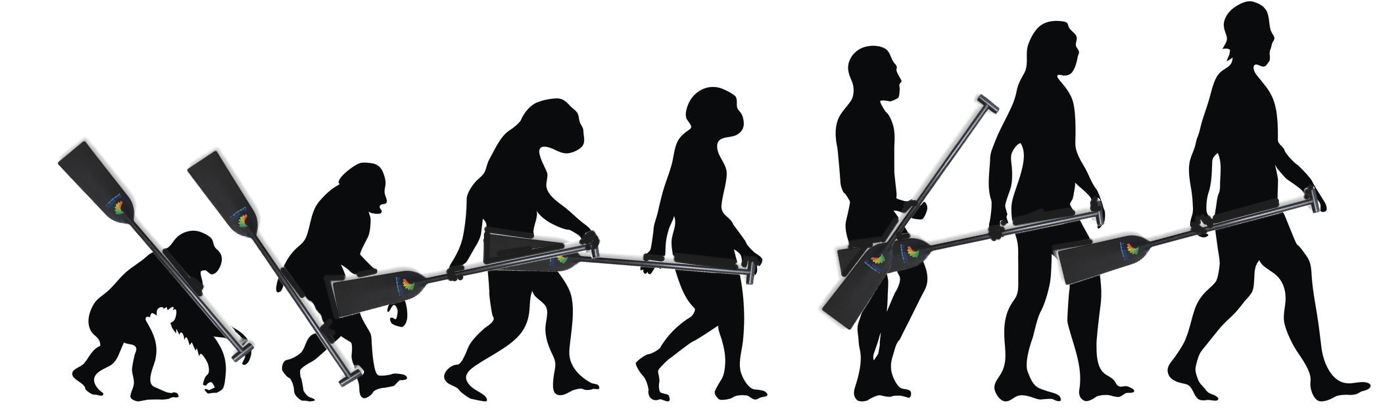
Some people will move through stages from a pure novice with enthusiasm towards becoming an elite paddler. Many paddlers will reach a level of skill, stay there and be good paddlers.
And many coaches will also train a particular technique along this continuum (rather than straight to the elite one) for many reasons. These reasons will be covered in this post.
A few paddlers (and coaches) will strive for the elite level, where every movement is optimized to achieve full potential and boat speed.
The journey from novice to elite is not about good or bad technique but about better technique. At a certain point, the focus shifts from correcting mistakes to refining movements for maximum efficiency. Let’s break down the stages of this evolution and explore where you might fit on this continuum.
Level 0: First-Time Paddler
At the starting line, a first-time paddler is all heart and hustle. With no prior experience, their focus is simply on keeping up with the team.
The paddle feels awkward and wobbles through the water, and you’re just trying not to splash your neighbour. At this stage, paddle is gripped tightly, often with both hands ending up close together, sitting upright, and dipping the blade into the water. Timing is shaky – the concept of synchronization with teammates is a distant goal.
The stroke is simple—reach forward, pull back, repeat. There’s no finesse, just effort. Most paddlers at this stage are thrilled just to keep the boat moving forward without capsizing. It’s chaotic, but it’s the starting point for every paddler.
For many recreational teams, this stage is enough to get started – to get the “paddling bug”. Coaches may keep things simple to ensure everyone enjoys the experience and stays engaged. However, the lack of refined technique limits boat speed, and paddlers at this level are far from realizing their full potential.
As they get stronger, the technique that got them started now becomes an injury risk. This is the time to move onto the next level.
Level 1: Top Hand Outside
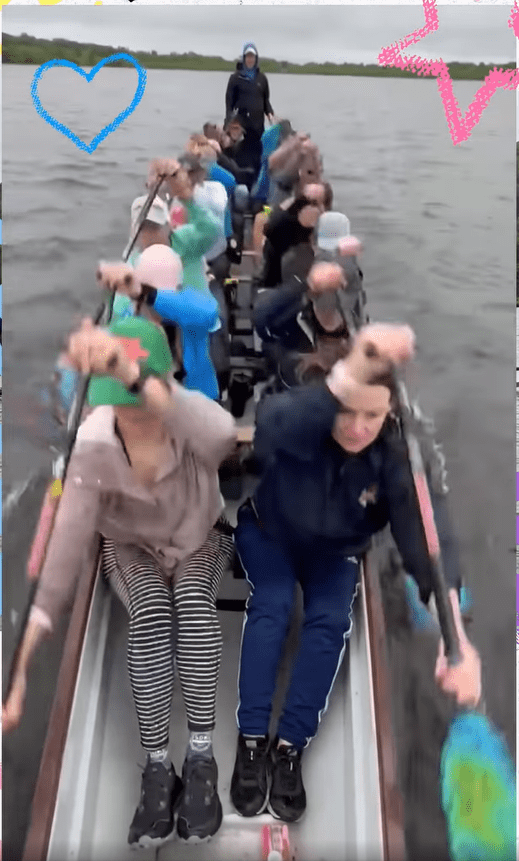
…. The remainder of this content is for members only…